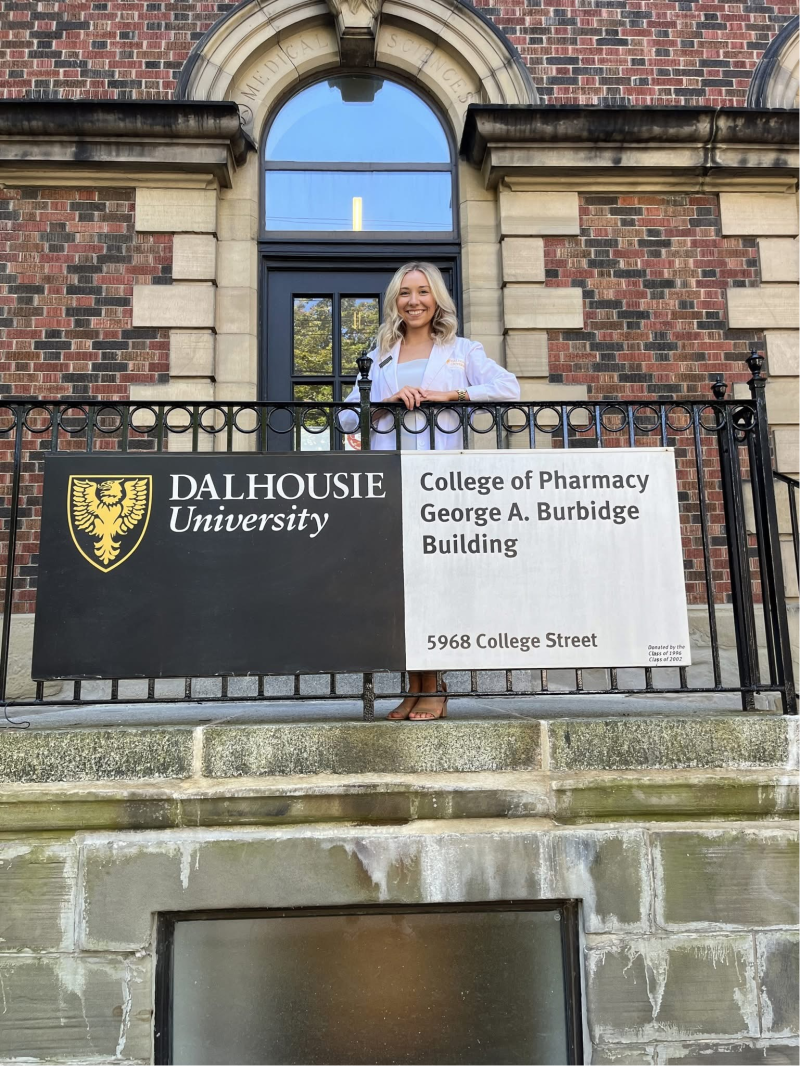
Q: My twins are entering grade 12 this year and are both interested in pursuing careers in healthcare. Can you tell us a bit about the admissions process and the pharmacy program offered at Dalhousie University?
Because New Brunswick does not currently have a pharmacy school, students pursuing pharmacy must apply outside the province. Dalhousie is a key pathway for many New Brunswick students, though some also consider Memorial University in Newfoundland and Labrador or, for a French-language program beyond those available in Quebec, the University of Ottawa. Since your question is specifically about Dalhousie University, we’ll focus on its pharmacy program.
Dalhousie University’s College of Pharmacy has changed significantly since I graduated in 2012 with a Bachelor of Science in Pharmacy (BScPharm). In 2020, Dalhousie replaced its bachelor’s-level program with an entry-to-practice Doctor of Pharmacy (PharmD) program, with the first PharmD class graduating in 2024.
Dalhousie University’s College of Pharmacy has changed significantly since I graduated in 2012 with a Bachelor of Science in Pharmacy (BScPharm). In 2020, the university replaced its bachelor’s-level program with the entry-to-practice Doctor of Pharmacy (PharmD), with the first class of PharmD graduates completing the program in 2024.
The shift to a PharmD reflects the evolving role of community pharmacists in Canada’s healthcare system. In New Brunswick, community pharmacists have become an increasingly important part of primary care. In addition to dispensing medications, they now provide immunizations, assess and prescribe for many common conditions, renew prescriptions, and help patients manage chronic diseases. These pharmacist-led services improve access to care and support a more collaborative, expanded team-based healthcare system in which community pharmacists work with physicians, nurse practitioners and other healthcare providers to meet patients’ needs as part of a larger integrated network.
As pharmacists have taken on greater clinical responsibilities, pharmacy education has evolved as well. The PharmD curriculum places greater emphasis on patient assessment, clinical decision-making, medication therapy management, interprofessional collaboration, and hands-on clinical training to prepare graduates for today’s practice environment.
To provide a more current perspective on the program, I’ll hand the remainder of this article over to my colleague Alyssa, who graduated from Dalhousie’s PharmD program in 2025.
Admission to Dalhousie’s PharmD program is competitive. Applicants must complete at least two years of university and the required prerequisite courses, including biology, chemistry, anatomy, physiology and statistics. A minimum grade of 70% is required in each prerequisite course, with an overall GPA of at least 2.7, though successful applicants often have considerably higher averages.
Applicants must also be Canadian citizens or permanent residents, with preference given to residents of the Maritime provinces. In 2025, the Government of New Brunswick reached an agreement with Nova Scotia to secure 16 seats per year at Dalhousie for New Brunswick students
over five years, helping improve access to pharmacy education and address workforce shortages. As part of the process, applicants complete an online multiple mini interview, or MMI, where they respond to a series of scenarios designed to assess communication skills, professionalism, ethical reasoning and critical thinking.
One of the strengths of Dalhousie’s PharmD program is its focus on preparing students for real-world patient care. Students learn to assess patients, develop care plans, manage chronic diseases, monitor medication effectiveness and identify medication-related problems using evidence-based decision-making. They also work with students and professionals from other healthcare disciplines, reflecting the collaborative nature of modern healthcare.
Problem-based learning remains a defining feature of the program. Rather than relying mainly on traditional lectures, students work in small groups to solve realistic patient cases. This helps them learn to identify relevant information, evaluate evidence and develop individualized treatment recommendations. This approach encourages independent learning while helping students build the clinical reasoning and problem-solving skills they will use throughout their careers.
Students also spend considerable time in skills laboratories, where they practice interviewing patients, performing physical assessments, administering injections, documenting patient care and communicating with other healthcare professionals. Many sessions use trained actors to simulate patient encounters, allowing students to build confidence and receive feedback in a supportive learning environment before entering clinical practice.
Hands-on experience is another major component of the program. The current PharmD curriculum includes 40 weeks of clinical rotations, roughly double the amount completed in the former bachelor’s program. Placements take place in community pharmacies, hospitals, ambulatory care clinics and other specialized settings. During my training, one of my most memorable rotations was at the outpatient oncology clinic at the Saint John Regional Hospital, where I counselled patients starting medications to prevent chemotherapy-induced nausea and vomiting. Some of my classmates completed placements in pharmacist-led primary care clinics, compounding pharmacies and even as far away as the Yukon, highlighting the wide variety of learning opportunities available.
Graduating from the PharmD program is an important milestone, but it is not the final step to becoming a licensed pharmacist. Graduates must complete the national Pharmacy Examining Board of Canada examinations, followed by a structured internship and the provincial jurisprudence examination for the province where they intend to practice.
Looking back, I feel the PharmD program provided an excellent foundation for my career and helped me become a confident healthcare professional. For students interested in science, lifelong learning and making a meaningful difference in patients’ lives, pharmacy continues to be a rewarding and evolving profession.